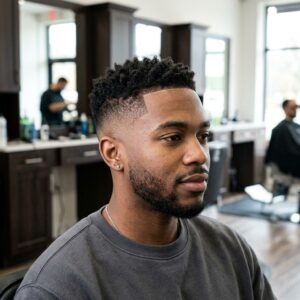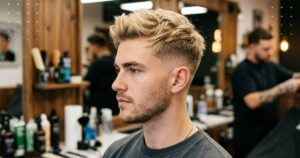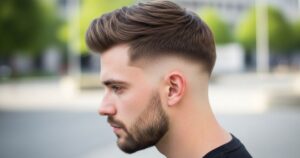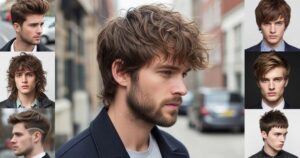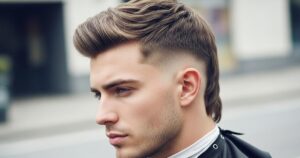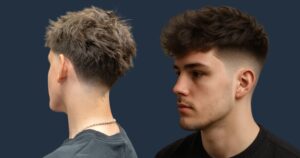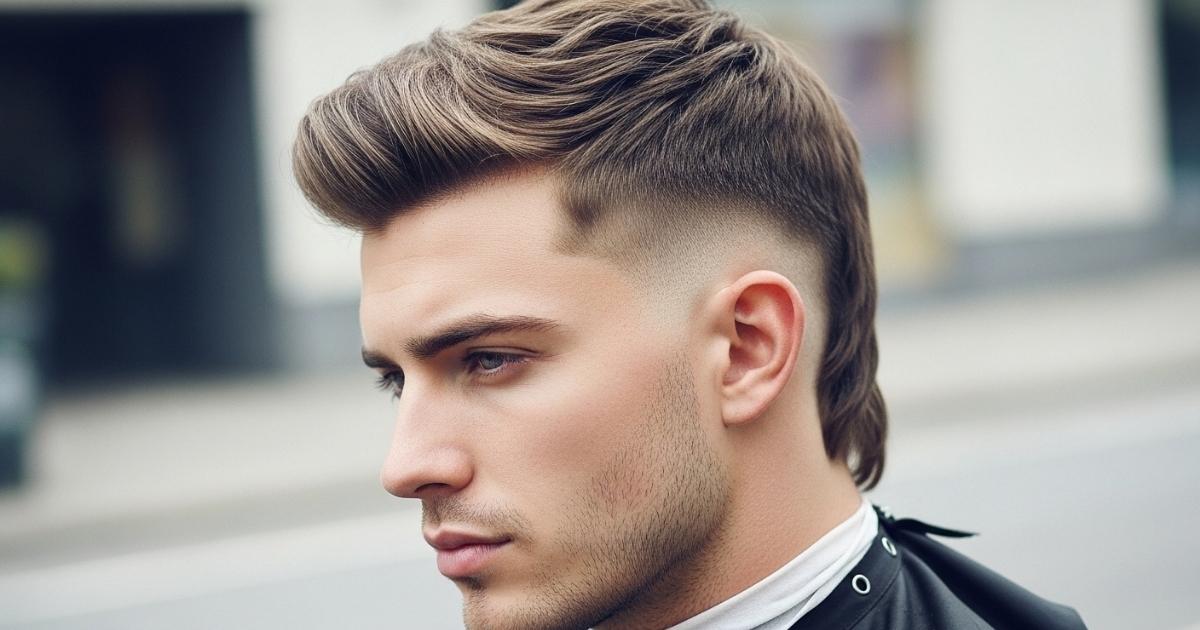
The mullet is back, and this time it’s sharper than ever. The low taper fade mullet takes the rebellious energy of the classic mullet and pairs it with the clean, gradual blend of a low taper fade. The result is a haircut that feels both nostalgic and brand new short and tidy around the ears and neckline, with noticeably longer hair left at the back and crown.
What makes this style so popular right now is its flexibility. It can look polished enough for the office or wild enough for a festival, depending on how you style it. Barbers love it because the low taper grows out gracefully instead of looking patchy after a few weeks, and clients love it because it works on almost every hair type, from straight and fine to thick and curly.
In this guide, we’ll break down the most popular variations of the low taper fade mullet, show you creative hybrid takes, explain who the cut suits best, and share practical tips on products, tools, and maintenance so your fade and mullet stay sharp between barber visits.
Gallery of Trending Low Taper Fade Mullet Styles
There isn’t just one way to wear a low taper fade mullet. The beauty of this cut is that it can be dialed up or toned down depending on your personal style, hair texture, and how much length you’re comfortable carrying at the back. Here are the variations currently trending with barbers and clients alike.
Short Mullet with Low Taper
This is the entry-level version of the cut perfect if you’re new to mullets or want something low-maintenance. The back is only slightly longer than the top, the taper stays tight and close to the skin near the ears, and the overall silhouette stays neat. It’s a great pick for anyone who wants a hint of mullet without committing to dramatic length.
Related post: 16 Bes Low Taper Fade Fluffy Hair 2026
Medium Mullet with Taper
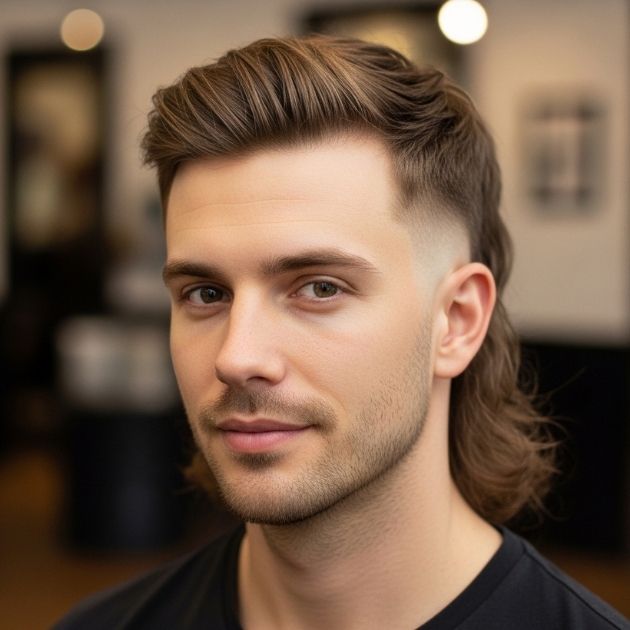
The medium length mullet strikes a balance between subtle and statement-making. There’s enough length at the back to create movement and texture, while the low taper keeps the sides controlled. This version is easy to style daily with just a small amount of product, making it a favorite for guys who want versatility without spending too much time in front of the mirror.
Long Mullet with Taper
For those who want maximum retro impact, the long mullet with a low taper delivers. The back section grows out significantly, often reaching the collar or beyond, while the taper keeps the sides from looking overgrown. This style leans heavily into 80s and 90s nostalgia and works especially well for people who already have some natural wave or curl to add volume.
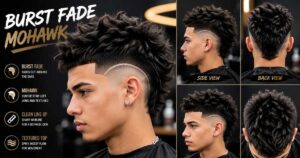
Burst Fade Mullet
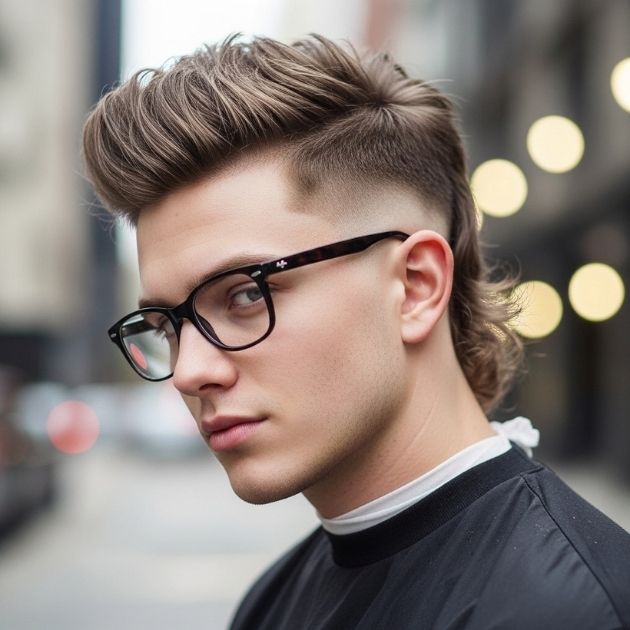
A burst fade curves around the ear instead of running in a straight line, creating a fanned, rounded fade pattern. When combined with a mullet, it adds an extra layer of detail and flair to the haircut. This version tends to draw more attention to the sides, balancing out the longer back section and giving the whole look a sharper, more sculpted finish.
Shaggy or Choppy Mullet
If a low-effort, lived-in look is more your style, the shaggy or choppy mullet is worth considering. The top and back are cut with heavy texturizing to create a messy, layered finish, while the low taper keeps the sides from looking unkempt. This version pairs beautifully with curl cream or texturizing powder for that “just rolled out of bed but somehow still stylish” effect.
Curly, Wavy, Straight Examples
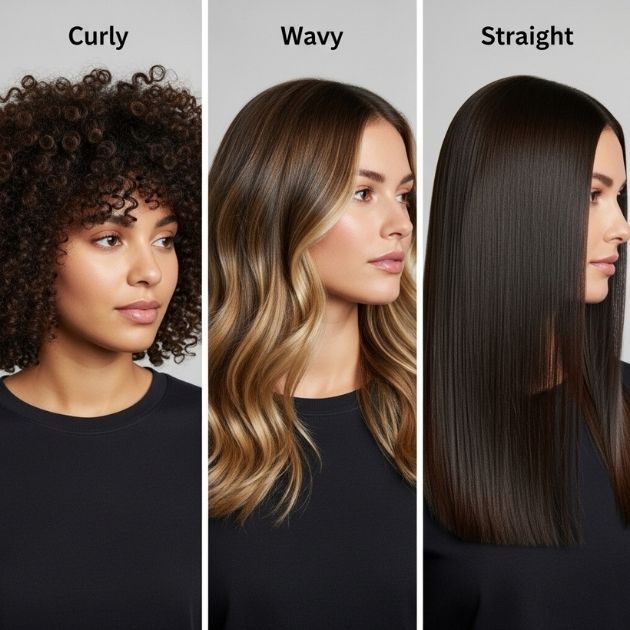
One of the biggest strengths of the low taper fade mullet is how well it adapts across hair textures:
- Curly hair Adds natural volume and bounce to the back section, making the mullet shape pop without much extra styling.
- Wavy hair Creates effortless movement and texture, ideal for a relaxed, beachy finish.
- Straight hair Gives a sleek, defined silhouette with crisp lines between the fade and the longer length.
- Thick hair Holds shape well and is perfect for layering, giving the mullet extra body.
No matter your texture, a skilled barber can adjust the taper height and the amount of length left at the back to suit your hair’s natural behavior.
Hybrid and Creative Takes
The low taper fade mullet doesn’t have to stand alone. Many of today’s most eye-catching haircuts are mullet hybrids combinations that borrow elements from other trending styles while keeping that signature longer-back silhouette. These mashups keep the cut feeling fresh and highly personalized.
Wolf Cut + Mullet + Taper
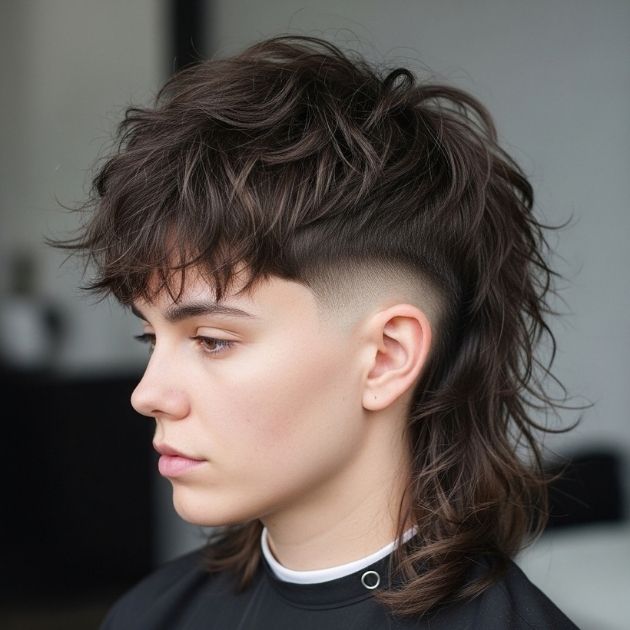
The wolf cut is essentially a mullet with heavy shag-style layering throughout the top and crown. When paired with a low taper, you get a haircut with tons of texture and movement on top, a defined mullet tail at the back, and clean, controlled sides. It’s one of the most requested combinations for people with naturally textured or wavy hair.
Curtain or Center Part Mullet
This hybrid pairs the mullet’s longer back with curtain bangs or a center part at the front. The result is a retro-inspired look with a soft, flowing fringe that frames the face, while the low taper keeps things from feeling overgrown. It’s a popular choice for those wanting a nostalgic 90s vibe with a modern, well-groomed finish.
Mohawk Mullet with Taper
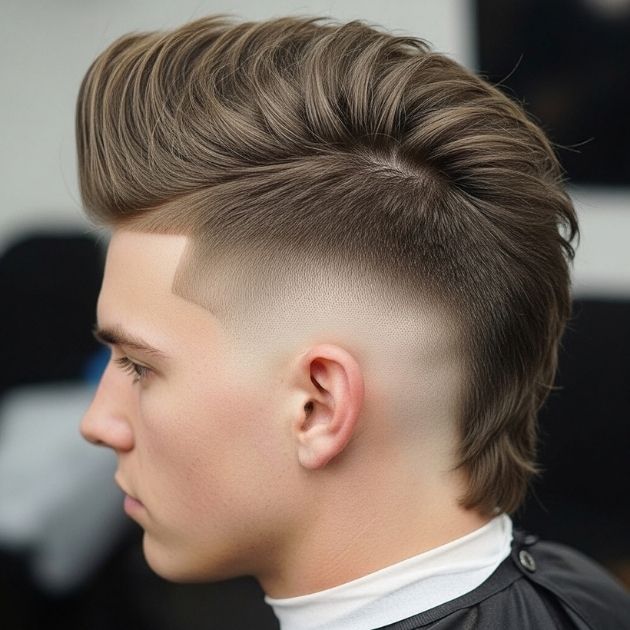
For a bolder statement, the mohawk mullet combines a raised strip of hair down the center with closely tapered sides and a mullet tail at the back. It’s spiky, edgy, and definitely not for the faint of heart but the low taper keeps the overall shape from looking too extreme, making it surprisingly wearable for everyday life.
Two Block Mullet with Taper
A favorite in K-pop and Asian street style, the two block mullet features noticeably longer hair on top that’s clearly separated (or “blocked”) from the closely tapered sides. When combined with a mullet-length back section, it creates a striking contrast between the controlled sides and the flowing top and back a look that’s both polished and adventurous.
Who Should Try It?
The low taper fade mullet has earned its popularity partly because it isn’t limited to one “type” of person. With the right adjustments, it can suit a wide range of face shapes, hair textures, ages, and lifestyles.
Face Shapes
| Face Shape | How the Low Taper Fade Mullet Works |
| Oval | Considered the most versatile shape almost any taper height and mullet length works well |
| Round | A low taper softens curves and adds length at the crown to create the illusion of height |
| Square | Reduces the appearance of strong, angular edges by softening the sides |
| Heart | Extra length at the back helps balance a narrower chin and wider forehead |
Hair Textures
- Straight hair Clean, sharp lines with a defined fade-to-length transition
- Wavy hair Natural movement adds character without extra effort
- Curly hair Enhances volume, especially at the back and crown
- Thick hair Ideal for layering and holds texture well between trims
Age and Lifestyle
This cut is genuinely multi-generational. Teenagers love it for its bold, trend-driven appeal, while adults appreciate that a more subtle version can still look professional. It also adapts well to lifestyle a shorter, neater version suits office environments and dress codes, while a longer, shaggier take is perfect for casual, creative, or outdoor lifestyles.
Styling Like a Pro
A great haircut is only half the equation how you style it day to day makes all the difference. Here’s what barbers recommend for keeping a low taper fade mullet looking intentional rather than messy.
Best Products
- Sea salt spray Adds texture and grit, especially useful for fine or straight hair
- Curl cream Defines natural curls and reduces frizz at the back
- Matte pomade Gives structure and hold without unwanted shine
- Texturizing powder Boosts volume and lift for a messier, lived-in finish
Tools to Use
- A diffuser attachment is ideal for curly or wavy hair, helping enhance natural texture without frizz
- A wide-tooth comb works best for straight hair, creating sleek, defined lines
- A lightweight hairdryer on a low or medium setting helps add volume at the roots without overheating the hair
Daily Routine
A simple three-step routine keeps the cut looking fresh:
- Apply your chosen product (sea salt spray, curl cream, or pomade) to damp hair
- Shape the top and back using your fingers or a comb, focusing on the mullet section
- Finish with a light hold spray to lock in the style, especially if you’re heading out for the day
This routine takes just a few minutes but makes a noticeable difference in how polished the cut looks.
Maintenance and Barber Tips
Like any fade, the low taper fade mullet needs consistent upkeep to stay looking sharp. The good news is that, compared to skin fades, it grows out far more gracefully meaning you have a bit more wiggle room between appointments.
Barber Refresh
Most barbers recommend a touch-up every four to six weeks to keep the taper clean and prevent it from blending too far into the longer back section. If you’re growing out the mullet for a longer, more dramatic look, you can stretch this slightly just make sure the taper itself doesn’t become too overgrown, or it’ll start to lose its defined shape.
Cost Range
Because this cut involves precise blending plus shaping the longer back section, it typically falls into the mid-to-high price range compared to a basic trim or simple buzz cut. Pricing varies by location and barber experience, but it’s worth seeking out someone who specifically has experience with mullets and tapers, since the blend between the two lengths is what makes or breaks the final look.
Global Influence and Subculture
Part of what makes the low taper fade mullet so exciting right now is how many different cultures and communities have put their own spin on it. It’s no longer tied to one specific look it’s become a global canvas for personal style.
K-Pop and Asian Trends
In Korean and broader Asian street style, the low taper fade mullet is often paired with the two-block cut or curtain bangs, creating a soft, layered look on top with sharply controlled sides. This combination has become especially popular among idols and trend-conscious young men, giving the mullet a refined, almost delicate edge.
Latino Barber Culture
Latino barbershops have long been known for precision fades and creative line work, and the mullet is no exception. Detailed taper work, sharp parts, and sometimes even shaved designs add a bold, artistic flair to the cut turning a simple haircut into a genuine style statement.
Western Revival
In the West, the mullet’s comeback is closely tied to skate culture, rock aesthetics, and viral social media trends. What was once considered an outdated or “uncool” cut has been reclaimed by a younger generation that values its retro rebelliousness often styled with a messy, textured finish for an authentic, unpolished vibe.
Comparison Corner
With so many fade and taper terms floating around, it’s easy to get confused about what sets each style apart. Here’s a quick breakdown of two common comparisons.
Taper vs. Fade Mullet
| Feature | Taper Mullet | Fade Mullet |
| Blend style | Gradual, subtle transition | Sharper contrast between lengths |
| Maintenance | Slightly lower | Slightly higher to maintain crisp lines |
| Best for | A softer, more natural look | A bold, more defined contrast |
In short, a taper blends gently into the surrounding hair, while a fade creates a more noticeable line of contrast. Many low taper fade mullets actually combine both a faded section near the hairline that tapers off as it moves up.
Drop Taper vs. Temple Taper
A drop taper follows the natural curve of the head, dropping lower behind the ear for a rounder, more organic shape. A temple taper, on the other hand, focuses on the area around the temples, creating a sharper and more defined hairline at the front. Both can be combined with a mullet, but the drop taper tends to suit rounder face shapes, while the temple taper works well for those wanting a more angular, defined front profile.
Conclusion
The low taper fade mullet proves that a haircut can be both nostalgic and completely current. By blending a clean, gradual fade with the bold length of a mullet, it offers something for almost everyone sharp enough for the office, edgy enough for the weekend, and adaptable across face shapes, hair textures, and lifestyles.
Whether you go for a short and subtle version, a dramatic long mullet, or one of the many creative hybrids like the wolf cut or two-block mullet, the key is finding a barber who understands how to blend the fade smoothly into the longer length. With the right products and a simple daily routine, this cut stays looking fresh, intentional, and effortlessly stylish no matter which version you choose.