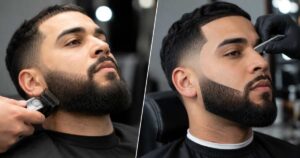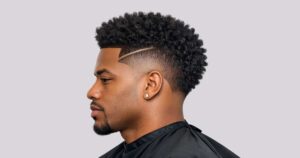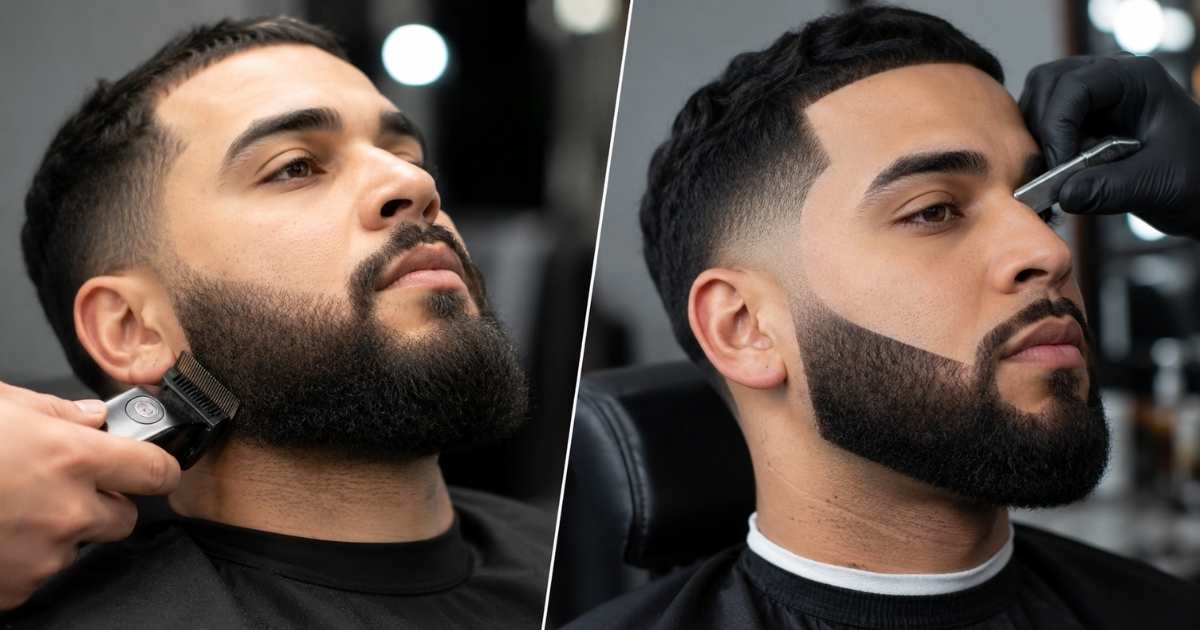
Ever left the barbershop unsure why your beard still looks unfinished? The debate around Beard Trim vs Beard Line-Up confuses more men than you’d think, mostly because both services sound similar but do completely different jobs. A trim controls length and bulk, while a line-up sharpens the edges that frame your face.
Understanding the difference between a beard trim and a beard line-up helps you ask for exactly what you need next time you sit in the chair. Whether you want a fuller shape or crisp, defined lines, knowing this distinction is the first step toward a beard that always looks intentional.
What Is a Beard Trim?
A beard trim is a length-and-density service that controls how much hair you have and keeps it growing in evenly across your cheeks, jaw, and chin. Beards rarely grow at the same rate everywhere on the face, so left alone they turn patchy and bulky in some spots, thin in others. A trim resets that balance without touching the outline.
What Does a Beard Trim Include?
A standard barbershop beard trim typically covers:
- Reducing overall length with clippers or scissors
- Evening out thick, uneven, or bulky patches
- Blending the beard into the surrounding haircut
- Tidying loose hair around the neck area
- Light shaping to start matching the beard to your face
Benefits of Getting a Professional Beard Trim
- Consistent density a barber spots uneven patches you’d miss in a mirror
- Preserved length professional tools remove bulk without flattening your style
- Healthier look trimming split ends keeps the beard looking fuller
- Better blending ties your beard cleanly into your haircut
Signs You Need a Beard Trim
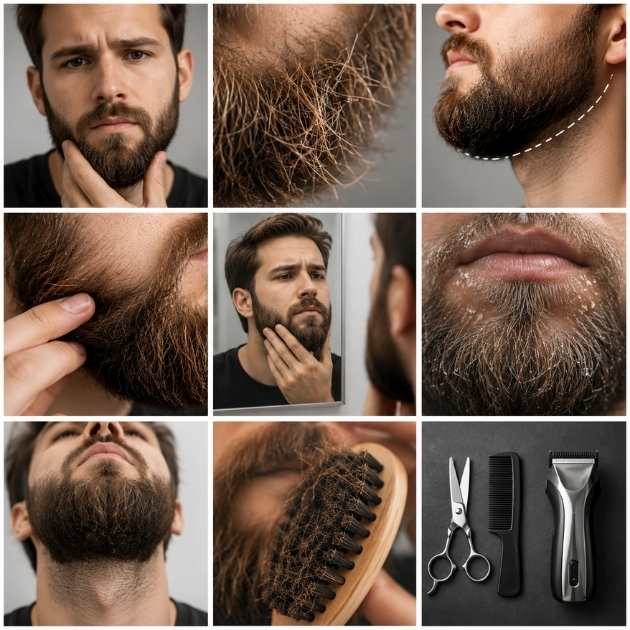
You’re probably due if you notice uneven growth, excess bulk along the sides or chin, stray hairs poking out at odd angles, a lost shape, or a scruffy, undefined neckline.
How Often Should You Trim Your Beard?
Most men should trim every 2 to 4 weeks. Shorter styles need more frequent upkeep since unevenness shows faster; longer beards can stretch closer to six weeks since extra length hides minor irregularities.
Related post: 20 Top Burst Fade Textured Crop Haircuts for Men in 2026
What Is a Beard Line-Up?
A beard line-up also called a shape-up or edge-up is all about precision edges, not length. Instead of removing bulk, a barber uses a trimmer, detail clipper, or straight razor to carve a crisp perimeter around the beard: the cheek line, neckline, and sideburn connection.
What Does a Beard Line-Up Include?
A proper line-up usually covers:
- Defining a clean, straight cheek line
- Carving a sharp, symmetrical neckline
- Clearing loose hair from the sideburn-to-ear zone
- Removing stray hairs along the outline
- Reinforcing the overall beard shape without cutting length
Beard Line-Up vs Beard Trim: What’s the Difference?
The simplest way to think about it: a trim manages volume, a line-up manages outline. A trim without a line-up leaves you with a neat but shapeless beard. A line-up without a trim gives you sharp edges wrapped around an overgrown, unruly beard. Most well-groomed looks require both, done together or in close rotation.
How Does a Beard Line-Up Improve Your Beard Shape?
A line-up doesn’t change your beard’s density or length, but it dramatically changes how finished it looks. Clean, symmetrical edges are what separate a beard that reads as “intentional” from one that reads as “just grown out.” Barbers often say the neckline alone is the single biggest factor in whether a beard looks groomed or neglected.
Beard Trim vs Beard Line-Up: Key Differences
Beard Trim vs Beard Line-Up Comparison
| Feature | Beard Trim | Beard Line-Up |
| Main focus | Length and volume | Sharp edges and definition |
| Hair removed | Noticeable reduces overall length | Minimal only along the outline |
| Tools used | Clippers, scissors, comb | Detail trimmers, straight razor |
| Purpose | Maintain beard size and balance | Create clean, defined lines |
| Best for | Overgrown, bulky, or uneven beards | Beards with good length but messy edges |
| Frequency | Every 2–4 weeks | Every 1–2 weeks |
Which One Should You Get: Beard Trim or Line-Up?
- If your beard has good shape but the edges look blurry get a line-up
- If your beard is bulky, uneven, or overgrown get a trim
- If it’s been more than three weeks since your last visit get both
Barber tip: book a line-up between full trims to keep edges sharp without disturbing your length, and always comb before you start so uneven patches are easier to spot.
Why Beard Shaping Is Important
Beard shaping is the bigger-picture step that turns a trimmed, lined-up beard into a style that suits your face. A skilled barber uses shaping to balance proportions a defined jawline beard can sharpen a rounder face, while chin-focused styles can visually lengthen a wider one. It considers bone structure, hair density, and growth pattern, not just symmetry for its own sake.
How to Choose the Right Beard Style for Your Face
- Round faces add length at the chin, keep sides tighter
- Square faces soften strong angles with slightly rounded edges
- Long faces favor fuller width and shorter chin length
- Oval faces most flexible, suits nearly any style
Popular Beard Trim Styles for Men
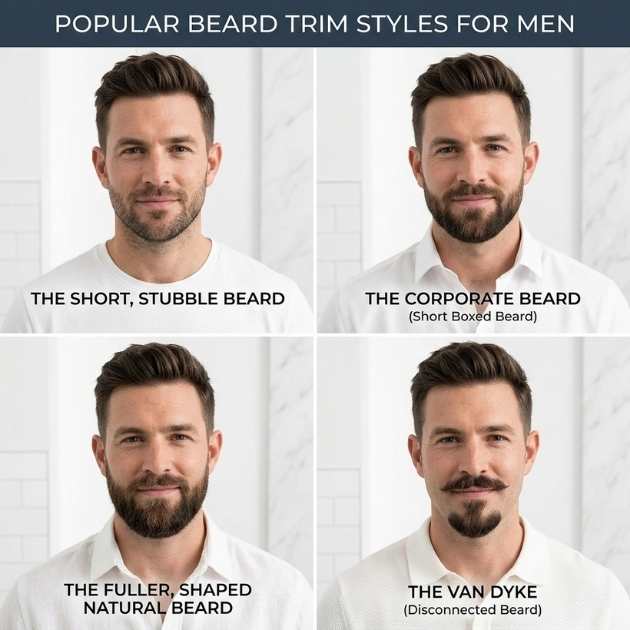
- Light beard subtle and low-maintenance, but needs frequent trims since short hair shows unevenness fast
- Short boxed beard clean, geometric lines with tight sides for structure without much length
- Defined jawline beard sharp, straight lines that emphasize a strong jaw; relies on precise line-up work
- Chin-focused styles draws attention to the center of the face
- Goatee chin-and-mustache combo that suits rounder faces
- Long sculpted beard full length kept structured through regular shaping
How to Trim Your Beard at Home
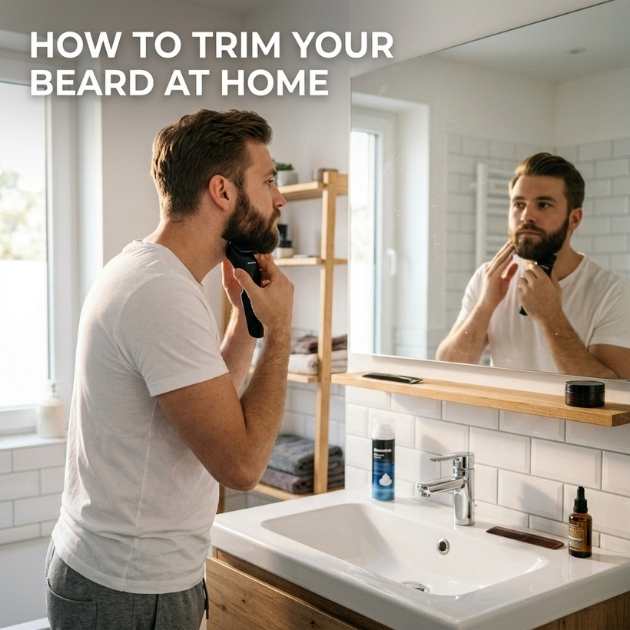
Step 1 Wash and dry your beard. This removes oil and product buildup so you can see the true length before you cut.
Step 2 Use the right tools. A trimmer with adjustable guards, precision scissors, a wide-tooth comb, and for beginners a shaping template all make a measurable difference.
Step 3 Trim the length gradually. Start with a longer guard than you think you need. You can always take more off, but you can’t put it back.
Step 4 Define the neckline. Place two fingers above your Adam’s apple that’s roughly where your neckline should begin. Everything below gets cleared; everything above stays.
Step 5 Clean the cheek line. With length balanced, clear stray hairs along the cheeks to sharpen the outline without disturbing the beard’s natural upper border.
Barber Tips for Trimming Your Beard at Home
- Trim dry, never right after a shower
- Work in good, direct lighting
- Check symmetry from multiple angles, not just straight-on
How to Line Up a Beard Neckline Properly
Trace an imaginary curve from just below each earlobe down to the Adam’s apple, arcing naturally rather than cutting a hard, flat line. A neckline set too high shortens your chin’s visual projection and makes the beard look stubby.
Common line-up mistakes to avoid: setting the neckline too high, cutting the cheek line too low, rushing the outline without checking both sides for symmetry, and using a dull blade that drags instead of cutting clean.
Best Beard Trimming Tips for a Clean Look
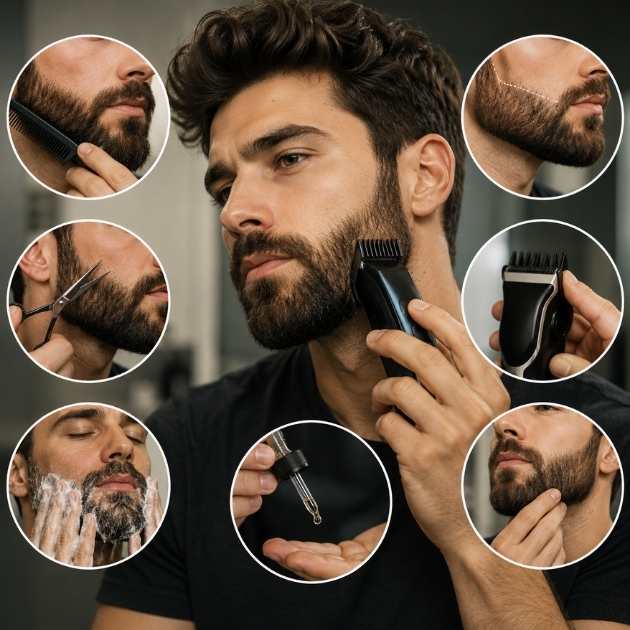
- Maintain sharp edges touch up your cheek line and neckline between full trims to keep the shape crisp
- Keep it balanced comb against the grain occasionally to spot patches growing at a different rate
- Trim while growing out only remove split ends and stray hairs; aggressive trimming undoes weeks of progress
Beard Maintenance Schedule: How Often Should You Get a Beard Trim?
| Beard Type | Recommended Trim Frequency |
| Light Beard | Every 1–2 weeks |
| Short Beard | Every 2–3 weeks |
| Medium Beard | Every 3–4 weeks |
| Long Beard | Every 4–6 weeks |
Shorter styles need more frequent upkeep since unevenness shows up faster; longer beards can stretch further between visits because extra length hides minor irregularities.
When Should You Visit a Professional Barber?
Even confident at-home groomers benefit from regular barber visits for details that are hard to judge on yourself especially your own neckline. Professional beard trim and line-up services bring sharper tools, better lighting, and an outside perspective that catches asymmetry a bathroom mirror can’t. Barbershops typically use professional-grade clippers, detail trimmers, and straight razors that deliver cleaner lines than most at-home trimmers.
If you’re searching for a beard line-up near you, look for a shop with reviews specifically mentioning beard work, not just haircuts line-up precision is its own skill, separate from cutting hair.
Frequently Asked Questions
How often should you trim a beard?
Most beards need trimming every 2–4 weeks, with shorter styles requiring more frequent upkeep than longer ones.
Is beard shaping the same as trimming?
No trimming manages length and thickness, while shaping defines the beard’s outline to match your face.
Should I trim my beard wet or dry?
Trim dry. Wet hair looks longer than it actually is, which often leads to cutting off too much.
Can a beard line-up damage beard growth?
No, a line-up only shapes the edges and has no effect on hair follicles or how your beard grows back.
What is the best way to trim a beard?
Start with a clean, dry beard, comb it out, and trim gradually with a longer guard before shaping the neckline and cheek line.
What should you avoid when trimming a beard?
Avoid cutting large sections at once, using dull tools, or trimming right after a shower when hair looks longer than it is.
What is the awkward beard length?
The awkward stage usually falls between two and four weeks of growth, when the beard looks patchy before it fills in.
How long is a beard most attractive?
Many people consider heavy stubble to a short, full beard (roughly 5–10mm) the most universally flattering length, since it looks deliberate and well-kept.
Final Thoughts
At the end of the day, the Beard Trim vs Beard Line-Up debate comes down to one simple idea: length versus edges. A trim keeps your beard balanced and manageable, while a line-up gives it the sharp, defined finish that makes it look deliberate rather than accidental. Neither service fully replaces the other, and most well-groomed beards rely on both working together.
Once you understand this difference, choosing the right service becomes easy. Pay attention to how your beard looks and feels, book accordingly, and you’ll walk out with a beard that stays sharp, balanced, and consistently put-together.